YouTube’s Inauthentic Content Policy Explained (Formerly Repetitious Content)
On July 15, 2025, YouTube renamed its Partner Program “repetitious content” policy to inauthentic content. Rumor threads immediately claimed AI voices and faceless channels were banned. The actual policy is narrower — and much more practical to audit once you know what human reviewers inspect.
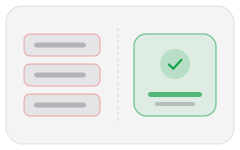
Why YouTube changed the name from “repetitious” to “inauthentic”
For years, YouTube’s monetization guidelines prohibited “repetitious content” — channels where viewers struggle to spot meaningful differences between videos on the same channel. With low-cost script generators, bulk text-to-speech pipelines, and automated slideshow renderers, thousands of channels began uploading dozens of lightly reworded videos every week.
Renaming the rule to inauthentic content made the standard explicit: the YouTube Partner Program (YPP) rewards channels built around original human choices — research, editorial framing, scripting, pacing, and visual craft — and excludes content that is mass-produced or generated from a rigid template at scale.
Key takeaway: Having a recognizable show format, intro sting, or recurring series is completely allowed. Demonetization happens when the substance inside that wrapper barely changes from episode to episode.
Inauthentic content vs. reused content: know which label hit you
Creators frequently mix up YouTube’s two main originality rejections, which leads to weak fixes and failed appeals:
- Inauthentic content (formerly repetitious): Compares your videos against each other. Even if you own 100% of the assets, a channel fails if uploads read like automated readings of scraped lists, slight variations of one script, looping ambient slideshows, or fill-in-the-blank templates.
- Reused content: Compares your videos against external sources. A channel fails when it republishes clips from movies, streams, TikToks, sports broadcasts, or public-domain compilations without adding enough original commentary, narrative structure, or educational analysis to transform the source.
Many automated faceless channels trigger both at once: stock B-roll loops or scraped clips (reused) glued to a formulaic AI listicle script with swapped numbers (inauthentic).
What YouTube reviewers actually inspect on a channel
According to YouTube’s published YPP review guidelines, reviewers cannot watch every minute of a 500-video archive, so they sample five specific slices of your channel:
- Main theme: What the channel promises overall and whether a viewer immediately sees human editorial direction.
- Most-viewed videos: Often the top 3–5 all-time uploads. One viral scraped or templated hit carrying 70% of your views can sink the entire channel’s application.
- Newest videos: Your latest batch of uploads — showing how the channel operates today.
- Biggest proportion of watch time: Long-hour ambient loops, rain-screen compilations, or stitched megacuts that generated your 4,000 watch hours.
- Video metadata: Titles, thumbnails, and descriptions. When 25 newest titles follow
Top 10 Shocking Facts About [Topic] (Part #)with identical 10:02 runtimes and copy-pasted descriptions, reviewers immediately suspect a template pipeline.
Formats that routinely fail vs. formats that pass
Commonly rejected as inauthentic
- Synthetic readings of Wikipedia articles, Reddit threads, press releases, or product specs with minimal added commentary or verification.
- Quote channels, affirmation loops, or quiz countdown timers generated in batches from a spreadsheet and one After Effects / CapCut template.
- “Part 1” through “Part 80” shorts or 8-minute videos where every episode uses the same opening hook, same music bed, same pacing, and interchangeable generic facts.
- Mass-uploaded daily videos (3–10 uploads per day at exact clock intervals) where titles and descriptions differ by a single noun.
Consistently accepted (including faceless & AI-assisted)
- Research-led explainers: Faceless history, engineering, finance, or science videos where each episode answers a distinct question, cites primary sources, and uses custom diagrams, maps, or annotated footage.
- Original commentary & critique: Essays where the script advances an argument, compares case studies, and edits visuals tightly to the spoken point rather than padding with random stock clips.
- Data & tutorial walkthroughs: Screen recordings, benchmarks, teardown analyses, or code/design tutorials built from hands-on testing.
How to audit your own channel before applying
Open your channel’s Videos tab as a stranger who has never heard of you and ask four blunt questions:
- If you cover up one noun in the last 15 titles, do half of them collapse into the exact same sentence?
- Do your descriptions explain what this specific episode covers and cites, or is 90% of every description identical boilerplate?
- Are almost all of your videos clustered within a few seconds of 8:02 or 10:01 because a script prompt targets a fixed word count?
- Could another creator reproduce 20 of your videos this afternoon with a spreadsheet and a one-click video generator?
You can test the metadata side of those questions in seconds with our free checker, then read our companion guide on fixing repetitive signals on faceless channels or monetizing AI-voice channels safely.
Frequently asked questions
Did YouTube ban reaction, compilation, or faceless channels in July 2025?
No. YouTube publicly confirmed that the July 2025 update was a naming clarification, not a ban on faceless channels, reaction commentary, or responsible AI tool usage. Original human commentary and editorial work remain eligible.
What is the difference between inauthentic content and reused content?
Inauthentic content targets templated, mass-produced videos that repeat across your own uploads with minimal unique effort. Reused content targets unedited or barely modified third-party clips taken from other creators, broadcasts, or libraries without transformative commentary.
Which videos do YPP reviewers check on my channel?
Reviewers focus on your main channel theme, most-viewed videos, newest uploads, biggest watch-time drivers, and public metadata (titles, thumbnails, and descriptions).
Run a pre-flight check on your channel: Inspect your latest ~30 public uploads across 7 repetition and template signals for free.
Check a channel free